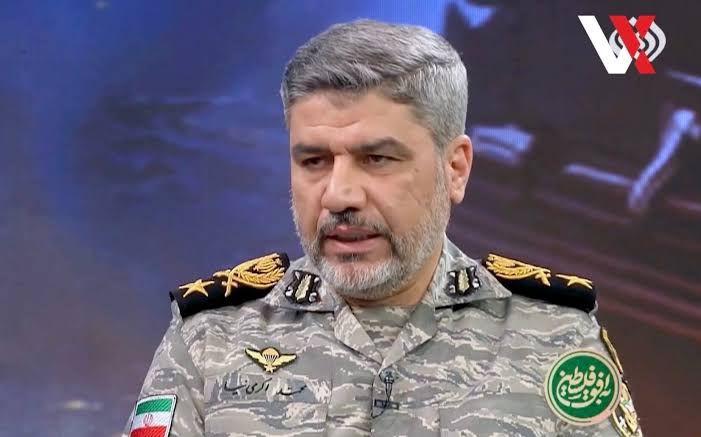
Tensions in the Middle East have escalated sharply after a senior Iranian military commander delivered a chilling warning, declaring that Iran is prepared for a prolonged conflict lasting up to eight years if necessary. The statement has intensified global concerns about the possibility of a wider regional war.
Speaking during a televised address, the commander of the Islamic Revolutionary Guard Corps (IRGC) said Iran is fully prepared to endure a long and difficult confrontation. According to the commander, the nation has strengthened its military capabilities, expanded its missile systems, and built defensive strategies designed to withstand extended warfare.
“Our nation has endured hardship before,” the commander reportedly said. “If our sovereignty or security is threatened, we are ready for eight years of war and beyond.”
The remark is widely seen as a reference to the devastating Iran–Iraq War, which lasted from 1980 to 1988 and claimed hundreds of thousands of lives. By invoking that period, Iranian officials appear to be signaling their readiness for a similar level of national mobilization if tensions continue to rise.
Military analysts say the warning comes amid growing friction between Iran and several regional and global powers. Recent military activity across the Middle East—including missile launches, drone deployments, and increased troop readiness—has fueled fears that the situation could spiral into a broader conflict.
International leaders have urged restraint, calling for diplomatic efforts to prevent further escalation. Many governments are closely monitoring the situation, warning that a prolonged war in the region could disrupt global energy markets, international trade routes, and regional stability.
Meanwhile, Iranian officials insist their posture is defensive, stating that the country seeks peace but will not hesitate to defend itself if provoked. The commander emphasized that Iran’s armed forces are prepared for “any scenario,” warning potential adversaries not to underestimate the country’s resilience.
Security experts say such rhetoric is often used as a strategic deterrent, but they caution that continued escalation between rival powers could make miscalculations more likely.
As the world watches closely, diplomats continue to push for dialogue to ease the tensions before the situation reaches a point of no return. For now, the Iranian commander’s stark declaration has sent a powerful message: Tehran believes it is ready for a long and costly confrontation if events move in that direction.